
Auto insurance
11 min read
What to Do After a Car Accident in California
The first hour after a crash decides a lot: whether anyone's injuries get worse, whether you leave with the information your claim needs, and whether you meet California's reporting deadlines. This checklist walks through the scene, the police and DMV reports, and the insurance claim, in the order you'll need them. Save it to your phone before you need it.
By the Iriana Insurance Services teamValencia, CA · CA License #0D44425
Published
At a glance
- Stop at the scene. Leaving can make it a hit-and-run. Call 911 if anyone is hurt; if no one is, move the cars out of traffic.
- Swap names, addresses, license numbers, VINs and insurance company and policy numbers with the other driver, as Vehicle Code 16025 requires.
- A crash that injures or kills anyone must be reported to the CHP or city police within 24 hours.
- Every driver must file a DMV SR-1 within 10 days when anyone is hurt or property damage tops $1,000, whoever caused it.
- Your insurer must acknowledge the claim within 15 days and accept or deny it within 40 days of receiving proof of the claim.
On this page9
What should you do right after a car accident in California?
Short answer
Stop, check for injuries and call 911 if anyone is hurt. If no one is hurt, move the cars out of traffic, then trade information with the other driver and take photos before anything changes.
- 1
Stop and get safe
California law requires every driver involved to stop. Turn on your hazard lights, and if no one is hurt and the cars can move, pull out of the travel lanes.
- 2
Call 911 for injuries
Call right away if anyone is hurt, even if it seems minor. Give the dispatcher your direction of travel and the nearest exit or cross street.
- 3
Trade information
Exchange names, addresses, driver's license numbers, vehicle identification numbers, and the insurance company and policy number. Show your license, registration and proof of insurance.
- 4
Take photos
Photograph every vehicle, the license plates, the damage, the lanes or intersection, the traffic signals and anything that blocked the view, ideally before the cars are moved.
- 5
Note witnesses
Ask anyone who saw the crash for a name and phone number. Their account can matter if fault is disputed later.
- 6
Keep it factual
Be polite, but don't argue, sign a statement about who was at fault, or promise to pay. The Department of Insurance also warns against signing anything if the other driver offers to cover your deductible.
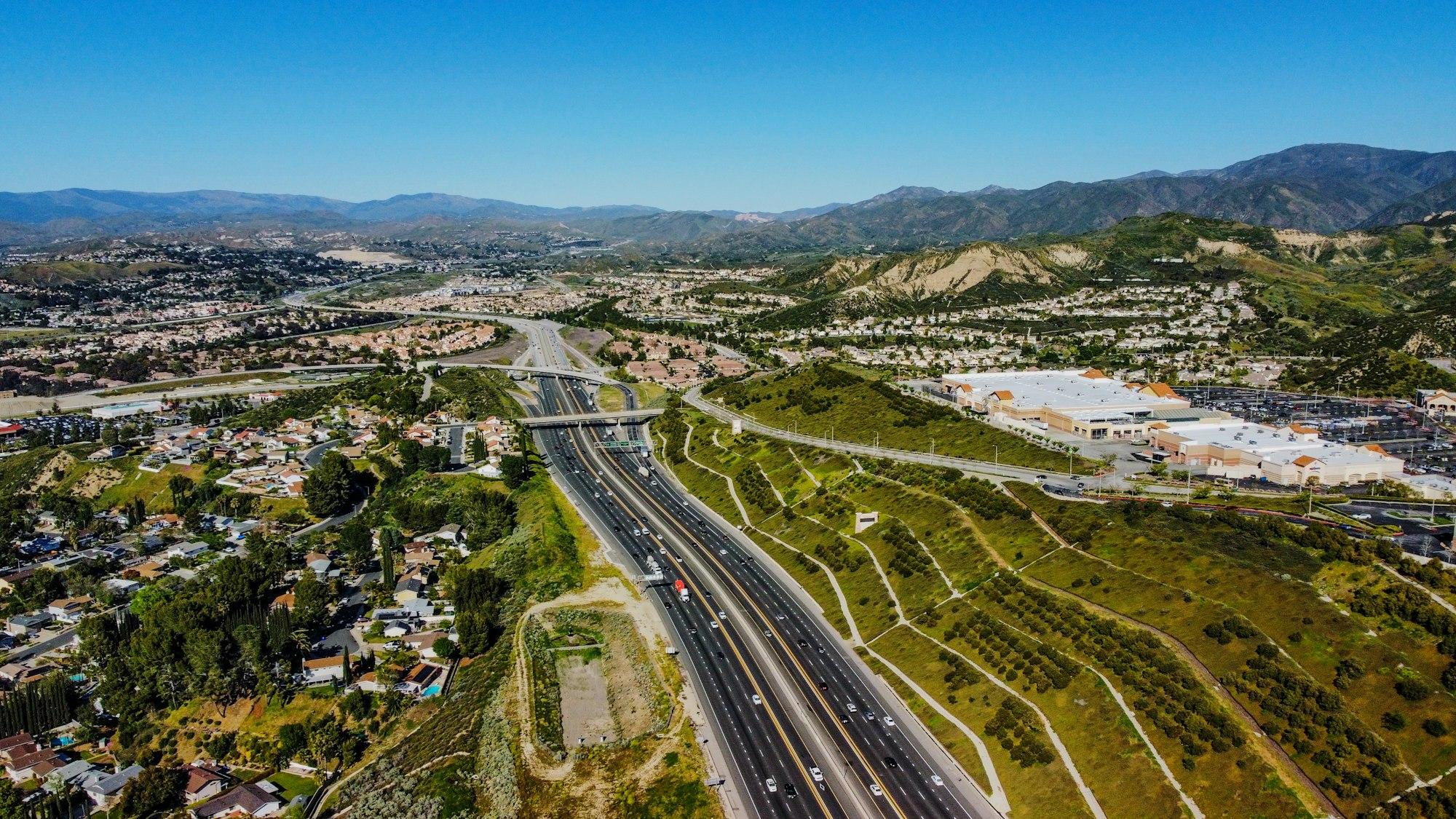
On the freeway, if no one is hurt and the cars can move, getting out of the lanes comes first. The CHP puts average daily traffic through the Interstate 5 and State Route 14 interchange at the Newhall Pass above 350,000 vehicles, and a disabled car in a live lane is dangerous for everyone, including you.
Hit a parked car or a fence?
Try to find the owner. If you can't, leave a note with your name, phone number and address, attach it securely, and report the collision to police. Driving off without doing that is a hit-and-run.
Do you have to call the police after a car accident in California?
Short answer
If anyone is injured or killed, yes: the crash must be reported to the CHP or the city police within 24 hours. For a damage-only crash between drivers who stopped and traded information, the law doesn't require a police report, but the Department of Insurance suggests notifying police, and a report helps when fault is disputed.
Which agency responds depends on where you crash. In the Santa Clarita Valley, the CHP's Newhall Area office patrols the freeways, including the 5 and the 14, plus roads in unincorporated communities such as Stevenson Ranch and Castaic. On city streets in Valencia, Saugus, Newhall and Canyon Country, it's the Santa Clarita Valley Sheriff's Station, because the City of Santa Clarita contracts with the Los Angeles County Sheriff's Department for law enforcement.
Ask the officer for a report number before you leave. If the CHP handled the crash, you can request the report online at crashes.chp.ca.gov. Your insurer will want that number, and so will we if you call us for help.
Hit-and-run
Report it to police within 24 hours. For an injury claim under your uninsured motorist coverage, California also requires physical contact with the hit-and-run vehicle and a sworn statement to your insurer within 30 days. Damage to your car usually goes through collision coverage instead, because uninsured motorist property damage applies only when the other driver is identified.
When do you have to file an SR-1 report with the DMV?
Short answer
Within 10 days if anyone was injured (even slightly) or killed, or if property damage was more than $1,000. Every driver involved must file, no matter who caused the crash, and law enforcement won't file it for you.
- It's separate from the police report. The DMV says the SR-1 is required in addition to any report you make to the police, the CHP or your insurance company.
- Private property counts too, so a crash in a shopping center parking lot can still need an SR-1.
- You can file online. Paper forms are accepted but take longer to process.
- Have this ready: your license, your plate number or VIN, your insurance information, and the other driver's vehicle and insurance details.
- An agent, broker or attorney can file it for you, but the duty stays with you, so confirm it was sent.
- Skipping it costs you. The DMV suspends the driving privilege of drivers who don't file, and reportable collisions go on your driving record regardless of fault.
Bumper covers, parking sensors and paint add up quickly, so don't assume a small dent stays under $1,000. When you're unsure, file. The DMV's accident reporting page (opens in a new tab) has the online SR-1.
When should you call your insurance company after an accident?
Short answer
As soon as you safely can, ideally the same day. The Department of Insurance says to notify your agent or insurer right away, and most policies require prompt notice of any accident.
You can call us first. We don't decide or pay claims; the insurance company's adjusters do. Brian can explain how your coverage applies, and either of us can give you your carrier's claims number, tell you what the adjuster will ask for, and follow up with the carrier if something stalls.
Have these ready when you report the claim:
- Your policy number, from the ID card in your glove box or on your phone.
- The date, time and exact location of the crash.
- The other driver's name, insurer and policy number.
- Your photos and any witness names.
- The police report number, if there is one.
- Who was hurt, and where your car is now.
Your insurer may record your statement or ask for a written one. Stick to what you saw and know, and say so when you're not sure of something.
Not sure your coverage would hold up?
Let us review your current policy and quote whichever carriers fit your record, such as Mercury, Travelers or Bristol West. Weekday requests between 9 and 4 usually get a call back within the hour.
Whose insurance pays after a car accident in California?
Short answer
California is a fault state, so the driver who caused the crash, through their liability insurance, pays for the other people's injuries and damage. You can also claim under your own collision coverage, pay your deductible, and let your insurer recover the money from the other driver's company.
Where a California car accident claim usually goes
The other driver caused it and is insured
- Usually paid by
- Their liability insurance
- Worth knowing
- You can use your own collision coverage instead and let your insurer collect from them
You caused it
- Usually paid by
- Your liability for the others; your collision for your car
- Worth knowing
- Your deductible applies to your own car
The other driver has no insurance
- Usually paid by
- Your uninsured motorist coverage for injuries; your collision for the car
- Worth knowing
- If the driver is identified, uninsured motorist coverage can pay your collision deductible, or up to $3,500 if you have no collision
Hit-and-run
- Usually paid by
- Uninsured motorist for injuries; collision for your car
- Worth knowing
- Police report within 24 hours
Medical bills
- Usually paid by
- Medical payments coverage if you carry it, or your health insurance
- Worth knowing
- Your health plan may seek repayment from the auto insurer later
| Situation | Usually paid by | Worth knowing |
|---|---|---|
| The other driver caused it and is insured | Their liability insurance | You can use your own collision coverage instead and let your insurer collect from them |
| You caused it | Your liability for the others; your collision for your car | Your deductible applies to your own car |
| The other driver has no insurance | Your uninsured motorist coverage for injuries; your collision for the car | If the driver is identified, uninsured motorist coverage can pay your collision deductible, or up to $3,500 if you have no collision |
| Hit-and-run | Uninsured motorist for injuries; collision for your car | Police report within 24 hours |
| Medical bills | Medical payments coverage if you carry it, or your health insurance | Your health plan may seek repayment from the auto insurer later |
Fault can also be shared. California uses comparative negligence, so each driver can be assigned a percentage of the blame, and that split affects who pays what.
When your insurer pays you and then collects from the at-fault driver's company, that's called subrogation. Your insurer has to tell you whether it will pursue the other side, and if it does, it must include your deductible in the recovery.
Don't sign a release with the other driver in exchange for your deductible; it can undercut your insurer's recovery. If anyone was hurt, talk to an attorney about your rights and deadlines. We're insurance agents, not lawyers, so we can explain your policy but not your legal options.
How does a car insurance claim work in California?
Short answer
You report the claim, an adjuster reviews the facts and the damage, and the insurer accepts or denies it. California's Fair Claims Settlement Practices Regulations put deadlines on each step.
- 1
Report it and get a claim number
Within 15 days of notice, the insurer must acknowledge your claim, send any forms you need and begin its investigation.
- 2
Inspection and estimate
An adjuster looks at the damage in person, through photos or at a shop. You pick the repair shop: Insurance Code 758.5 says an insurer can't require a specific one.
- 3
A decision
Once you've provided proof of the claim, the insurer has 40 days to accept or deny it, in whole or in part. If it needs more time, it must tell you in writing and update you every 30 days.
- 4
Payment
After accepting the claim, the insurer has 30 days to pay.
- 5
Repair or total loss
If the car is totaled, the settlement is based on actual cash value, which generally means fair market value, and must include taxes, license and transfer fees for a comparable car.
What about a rental car?
Rental reimbursement on your own policy pays only if you bought it, so check your declarations page before you rent. When the other driver is clearly at fault, ask their insurer whether it will cover a rental while your car is repaired.
If an insurer misses these deadlines or stops responding, the California Department of Insurance takes complaints on its consumer hotline at 800-927-4357.
How can you be ready before the next accident?
Short answer
Keep your insurance ID card in the car and on your phone, save your carrier's claims number, and check that your policy includes the coverage you'd want after a crash: uninsured motorist, collision and rental.
The time to find out you skipped rental or collision is before a crash, not after one. Our California car insurance page explains each coverage, and our guide to California's minimum car insurance requirements shows the gaps a bare-minimum policy leaves.
If the DMV suspended your license after a crash without insurance, an SR-22 filing is usually part of getting it back; see SR-22 insurance in California. Drivers in the Santa Clarita Valley can also read our page on car insurance in Santa Clarita.
Review your car insurance before you need it
A free policy review from a two-person Valencia agency with 30 years of experience. Call (818) 909-7486 or start online.
Sources
Official and primary sources we checked for this guide. Rules change, so confirm details with the source.
- 1California DMV: Driver handbook, financial responsibility and collisions (opens in a new tab)dmv.ca.gov
- 2California DMV: Accident reporting (SR-1) (opens in a new tab)dmv.ca.gov
- 3California Vehicle Code 16000 (DMV report within 10 days) (opens in a new tab)california.public.law
- 4California Vehicle Code 16025 (information drivers must exchange) (opens in a new tab)california.public.law
- 5California Vehicle Code 20008 (injury crash report within 24 hours) (opens in a new tab)california.public.law
- 6California Department of Insurance: So You've Had an Accident, What's Next? (opens in a new tab)insurance.ca.gov
- 7California Department of Insurance: Automobile insurance guide (opens in a new tab)insurance.ca.gov
- 8Cal. Code of Regulations, Title 10, 2695.5 (claim acknowledgment within 15 days) (opens in a new tab)law.cornell.edu
- 9Cal. Code of Regulations, Title 10, 2695.7 (40-day decision, 30-day payment) (opens in a new tab)law.cornell.edu
- 10California Insurance Code 758.5 (choice of repair shop) (opens in a new tab)california.public.law
- 11California Insurance Code 11580.2 (uninsured motorist and hit-and-run rules) (opens in a new tab)california.public.law
- 12California Highway Patrol: Newhall Area office (opens in a new tab)chp.ca.gov
- 13City of Santa Clarita: Sheriff and CHP services (General Plan EIR section 5.12) (opens in a new tab)santaclarita.gov